


The dispute escalated on Friday after Ukraine accused Hungary of briefly detaining a group of Ukrainian bank employees transporting $40 million and nine kilogrammes of gold through the country.
Ukraines Foreign Minister Andriy Sybiga said Hungary had taken the group hostage, but Budapest later announced they would be deported back to Ukraine after a short detention.
HungarysNational Tax and Customs AdministrationNemzeti Ad- s Vmhivatal (NAV) said seven Ukrainian citizens were detained on Thursday, including a former Ukrainian secret service general, along with two armoured cash transport vehicles. The agency initially said it would be conducting criminal proceedings on suspicion of money laundering.
What can Europe learn from Orban's victory in Hungary's elections?
Travel warning
Ukraine then urged its citizens to avoid travelling to Hungary, citing the inability to guarantee their safety amid the arbitrary actions of the Hungarian authorities.
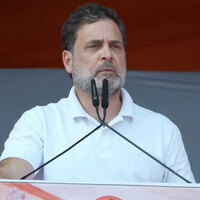
Speaking earlier at a business conference on Thursday, Orban warned Ukraine over the Druzhba dispute.
We will win, and we will win with force... there will be no compromise whatsoever. We will defeat them, we will wrestle down the oil blockade and force the Ukrainians to resume shipments, Orban said.
Energy dependence
Hungary and Slovakia the European Unions last importers of Russian crude say the delay is retaliation linked to their refusal to fully support Ukraine aid.
Hungary relies on the Druzhba pipeline for 86 percent of its 5.75 million tonnes of oil a year, while Slovakia depends on it for nearly all of its 4.66 million tonnes.
Both countries have used reserves and sought more expensive supplies through the Adriatic pipeline via Croatia. But regional refiner MOL haswarnedof possible shortages if Druzhba remains shut.
Orbans comments come weeks before snap elections on 12 April, with his Fidesz party trailing challenger Peter Magyars Tisza party in opinion polls.
Last month Orban vetoed a 90 billion European Union loan to Ukraine and blocked new sanctions against Russia.
Pipeline dispute shows Central Europes struggle to cut ties with Russian oil
Russian oil exemption
The dispute also reflects wider tensions over Central Europes reliance on Russian energy.
In June 2022, the European Union granted Hungary, Slovakia, Czechia and Bulgaria an exemption from a ban on Russian crude adopted after Moscows invasion of Ukraine.
The exemption allowed those landlocked countries to keep receiving oil through the southern Druzhba pipeline while reducing dependence on Russian supplies.
Areportby the Center for the Study of Democracy (CSD) said Hungary and Slovakia imported 27 million tonnes of Russian crude worth 13 billion between 2022 and 2024 under the exemption.
The report said the purchases generated 5.4 billion in taxes for the Kremlin, enough for 1,800 Iskander missiles.
Other countries have since moved away from Russian oil. Czechia ended imports by late 2024, while Bulgaria phased them out by mid-2023 after switching the Lukoil-owned Burgas refinery to non-Russian crude and relying on regional fuel trade and European Union support to stabilise supplies.
Originally published on RFI