


Tens of thousands of US troops are stationed across Europe on around 50 bases a presence that dates back to the period after the Second World War, whenWashingtonchose to keep forces on the continent to prevent another major conflict.
Many of those bases now carry out missions linked to NATO.
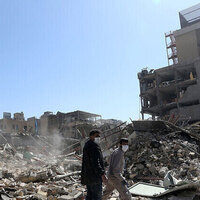
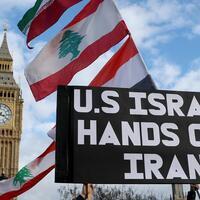
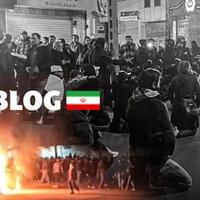
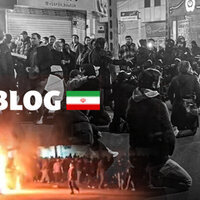
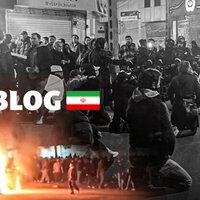
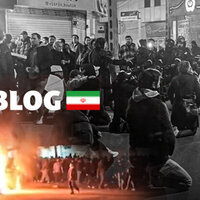
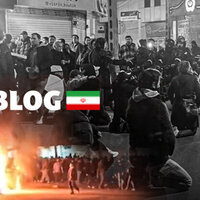
But in recent days, Washington has sought to use some of these facilities as part of its war inIran, triggered by US-Israeli strikes that killed Supreme Leader Ayatollah Ali Khamenei and set off retaliatory Iranian attacks on US bases across theMiddle East.
Host countries can refuse, because the bases remain under the full sovereignty of the states where they are located.
What was once a technical detail of military cooperation has suddenly become a political question, exposing divisions acrossEurope.
Some governments have refused to help, while others have offered political backing and one leader has changed course after initial resistance.
What could Macron's French nuclear umbrella mean for Europe?
UK U-turn
The United Kingdom was initially reluctant to support the US operation. Prime Minister Keir Starmer refused requests to use British military bases for the first strikes onTehran, saying over the weekend that the UK did not believe in regime change from the air.
Trump reacted angrily. Speaking to British tabloid The Sun on Monday, he said it was sad to see that the US-UK relationship was not what it used to be.
Starmer had not been helpful, Trump said adding that while the United States did not actually need the UK, he should have helped.
He contrasted the British position with that of other allies. France has been great, Trump said, adding thatGermanyand NATO had also been supportive. Theyve all been great. The UK has been much different from the others.
France and Germany have offered political backing for the strikes and suggested they could play a defensive role in the region.
Starmer later reversed his position and agreed to allow the US to use British bases for attacks on Iranian missile sites.
Europes defence dilemma: autonomy or dependence?
Spain holds firm
Spain has taken the clearest stand against the war. Prime Minister Pedro Snchez said his country would not participate in any way in the war waged byDonald TrumpandBenjamin Netanyahuin Iran, calling it a senseless war with unforeseeable consequences.
He also banned the use of the Spanish bases at Morn and Rota in southern Spain.
The Spanish government said US actions were unilateral and do not have the backing of multilateral organisations.
The bases will provide no support, except in the event of humanitarian necessity, the country's defence minister said.
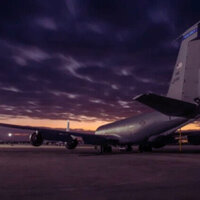
The Pentagon has since withdrawn several refuelling aircraft from its bases in Spain.
The dispute has also drawn in theEuropean Union. After Trump reportedly threatened economic retaliation against Spain, EU industry commissioner Stphane Sjourn said: Any threat against a member state is by definition a threat against the EU.
France draws nuclear red lines as Macron explores wider European deterrence role
A longstanding presence
The dispute highlights the scale of the American military presence in Europe.
US troops are stationed across Europe, operating fromdozens of installationsincluding major air bases, ports and training areas. In early 2025, the US had nearly 84,000 service members on the continent, according to theUS European Command.
The American military footprint in Europe dates back to the aftermath of the Second World War and expanded dramatically during the Cold War, when US troop numbers on the continent peaked at around 475,000 in the late 1950s.
After the collapse of theSoviet Unionin 1991, their presence fell sharply to the tens of thousands.
Today the largest concentrations of US forces are in Germany, Italy, the UK and Spain, with smaller or rotational deployments in countries including Poland and Romania. Because the bases sit on host-nation territory, governments retain full legal authority over how they are used.
Franco-German defence project under strain as Berlin signals possible exit
As conflict escalates, European leaders have called for restraint.
The developments in Iran are greatly concerning, European Council President Antnio Costa andEuropean CommissionPresident Ursula von der Leyen said in ajoint statementon 28 February.
They urged all sides to exercise maximum restraint, protect civilians and respect international law.
European countries have begun reinforcing their defences in the eastern Mediterranean.Franceand Greece have moved naval assets towardsCyprus, and France has reinforced air defence systems after drones targeted a British base on the island.
Originally published on RFI