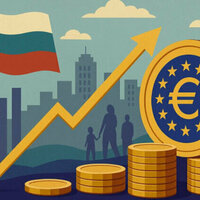



Public opinion in Bulgaria remains split on the question of whether the country is truly ready to join the eurozone and what impact this will have on prices, according to recent Eurobarometer data. Economists Nikola Yankov and Georgi Vuldjev weighed in on the issue on Nova TV, offering differing perspectives.
Nikola Yankov pointed out that Bulgaria has been a member of the European Union since 2007 and has been monitored by Eurostat ever since. He emphasized that Bulgaria was actually prepared for eurozone membership back in 2007, with plans to join alongside the Baltic states by 2009. At that time, Bulgaria was unique among non-Baltic countries due to its currency board arrangement. Despite being economically and politically ready, Bulgaria's entry was delayed due to a lack of willingness from eurozone leaders, he noted.
The economists also debated the connection between inflation and eurozone membership. Yankov argued that inflation tends to be higher in countries outside the eurozone. He attributed inflation primarily to three main causes: large government budget deficits that increase the money supply, rising costs of raw materials that producers pass on to consumers, and internal administrative decisions to raise salaries and pensions. According to him, none of these factors are related to adopting the euro.
Yankov also mentioned that starting January 1, prices will be displayed in both leva and euros for a period of one month, with discussions underway to potentially extend this dual pricing phase to six months.
On the other hand, Georgi Vuldjev viewed eurozone accession itself as an inflationary trigger, referencing Eurostat data to support his claim. He criticized recent governments for failing to fulfill their promises and called the official information campaign on the euro transition superficial. Vuldjev stressed the need for more comprehensive analyses from both the Ministry of Finance and the Bulgarian National Bank.
Source:Nova TV