


Officials, industry leaders and experts gathered in Paris at Frances invitation on Monday, with the aim of building momentum ahead of the UNsCOP31 climate summitin Antalya, Turkey thisNovember.
The meeting comes at a critical moment for methane the second biggest driver of global warming after carbon dioxide, but far more potent in the short term.
Over a 20-year period, methane traps roughly 80 times more heat than CO2, even though it lingers in the atmosphere for a much shorter time. That makes cutting methane one of the fastest ways to slow warming.
I sincerely hope that the discussions we will have today will enable us to join our forces to accelerate the implementation of effective solutions to reducemethane emissions, French Ecological Transition Minister Monique Barbut told participants.
She stressed that no single country or sector can tackle the problem alone nobody can win it alone, she said.
France leaves climate change off G7 environment summit agenda to placate US
Fossil fuels still lag behind
The urgency of her message was underlined by new findings from the International Energy Agency (IEA), which said methane emissions from the fossil fuel sector remain near record highs.
According to the IEAsGlobal Methane Tracker 2026, oil, gas and coal operations account for about 35 percent of human-caused methane emissions. Despite the availability of relatively simple fixes, there is little evidence that emissions are falling.
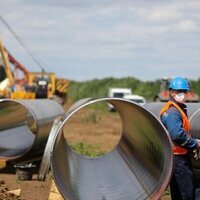
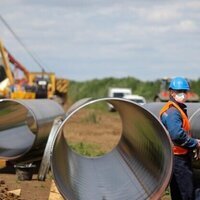
Methane leaks can occur across energy systems from pipelines and processing facilities to storage infrastructure and are sometimes released deliberately during maintenance. The IEA said these emissions could often be cut quickly and at relatively low cost using existing technology.
There is also a strong economic case for action. If countries with spare gas export capacity and major importers adopted widely available methane-reduction measures, nearly 15 billion cubic metres of gas could be brought to market in the short term.
Over time, that figure could rise to almost 100 billion cubic metres annually. Eliminating routinegas flaringthe practice of burning off excess gas could unlock a further 100 billion cubic metres each year.
Barbut highlighted theenergysector as a clear starting point. We must, however, be clear the energy sector offers today the fastest and often the most cost-effective reductions, she said, adding that tackling leaks, venting and flaring is well within reach.
Global methane emissions still far above what countries report, IEA warns
Broader emissions challenge
While fossil fuels are a major source, methane emissions extend far beyond the energy sector. Agriculture is asignificant contributor, particularly through livestock such as cows and sheep, which release methane during digestion and via manure.
Rice farming also plays a role, as flooded fields create ideal conditions for methane-producing bacteria. Meanwhile, household waste adds to the problem when organic material decomposes in landfills without proper management.
Global efforts to rein in methane have gathered pace in recent years. Under the Global Methane Pledge launched atCOP26 in Glasgowin 2021 nearly 160 countries have committed to cutting emissions by 30 percent by 2030, compared with 2020 levels.
Yet progress remains slow. Barbut warned that the world is still very far from meeting that target.
With COP31 on the horizon, France is hoping its push at the G7 level can help close that gap.
(With newswires)
Originally published on RFI