

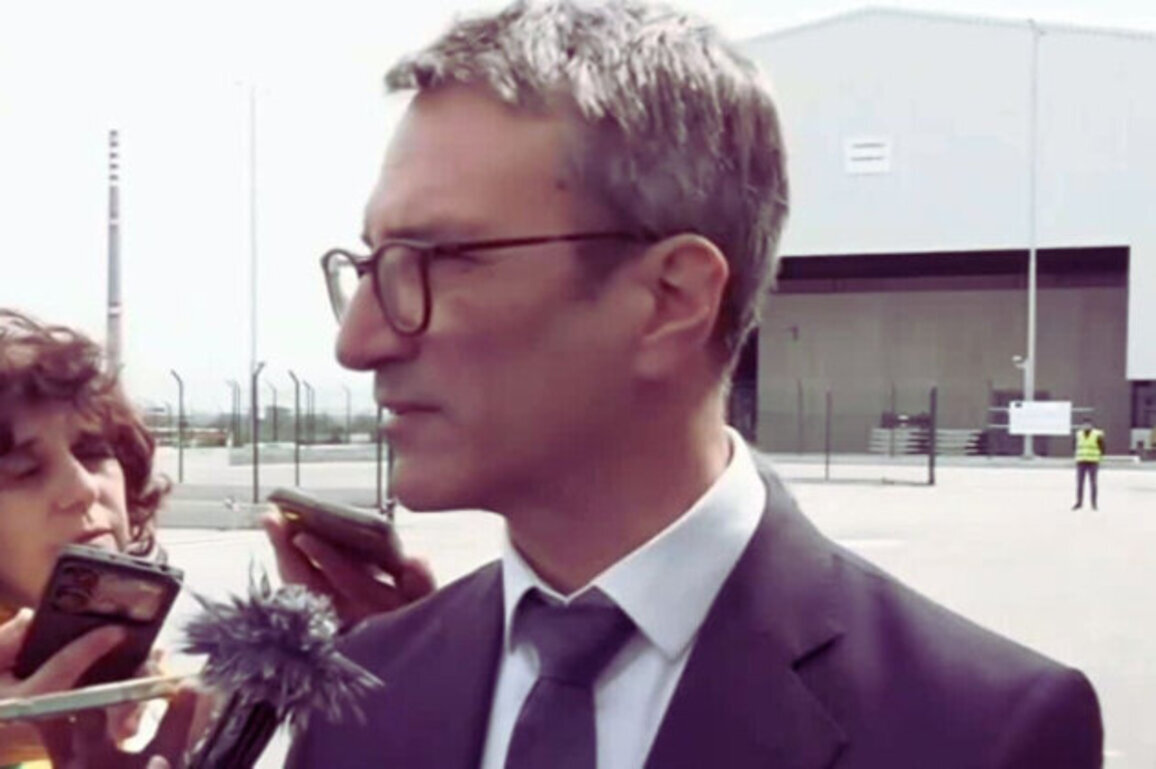
Acting Energy Minister Traycho Traykov said Bulgaria should not tap into its 90-day fuel reserves to ease prices, stressing that they must remain a safeguard in case of an actual supply disruption. Speaking to journalists after the opening of the National Repository for Radioactive Waste, he underlined that the reserves are intended as a ?buffer in the event of a physical shortage,? not as a tool for market intervention.
Traykov defended the government's current approach to rising fuel costs, arguing that the measures in place are among the most effective in Europe. ?The measures, in the way the Bulgarian government took them, are the most functional,? he said, noting that other countries have been forced to revise their policies repeatedly. According to him, the guiding principles remain unchanged, namely that support should be ?targeted? and ?temporary.?
He added that approval from the European Commission is expected shortly, which would allow the launch of a support scheme for energy-intensive industries. The minister also sought to reassure that Bulgaria has sufficient fuel supplies and that domestic prices remain comparatively low by European standards.
Alongside the policy remarks, Traykov highlighted the launch of the National Repository for Radioactive Waste at the Radiana site, describing it as a major infrastructure achievement. ?The facility is of the highest class, one of the most modern in Europe,? he said. Funded with 76 million euros from the Kozloduy Fund, the site is designed to store low- and intermediate-level radioactive waste generated within Bulgaria.
The repository will operate over a long-term horizon, with a capacity of 66 reinforced concrete structures capable of holding around 19,000 containers. It is intended to safely manage waste from industry, medicine, households, and the decommissioning of units I to IV of the Kozloduy nuclear power plant, as well as from future nuclear projects. Traykov emphasized that high-level waste and spent nuclear fuel will not be stored at the facility, while medium- and low-level materials will be securely contained for up to 300 years.