


(CN) - Bulgaria, the EU's least-developed nation, fell into deeper political chaos Thursday after its coalition government collapsed in the face of widespread protests over corruption and economic hardships.
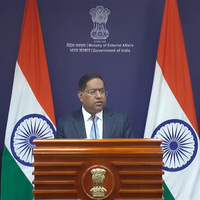
Right-wing Prime Minister Rosen Zhelyazkov announced his resignation on Bulgarian national television Thursday, saying the government had heard "the voice of the people" demanding new elections.
"As we have stated repeatedly, we hear the voice of the citizens who are protesting against the government," Zhelyazkov said. "We hear it consciously."
Bulgaria has gone through several topsy-turvy years with its voters going to the polls in snap elections seven times since massive anti-government protests in 2020-2021 brought down Boyko Borissov, a three-time prime minister "man of the people" who remains a chief power broker in the country and a member of parliament.
His center-right populist party, the Citizens for European Development of Bulgaria, better known as GERB, holds the most seats in the National Assembly despite accusations that Borissov and GERB have turned Bulgaria into what many see as a "mafia state" since gaining power in 2007.
Bulgaria, with a population of about 6.4 million, is the EU's poorest nation in terms of per-capita GDP and it suffers from emigration, a lack of investment and endemic corruption.
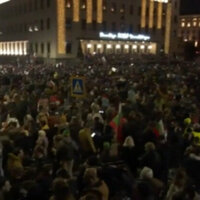
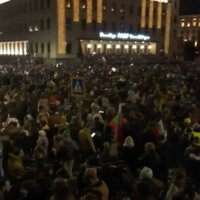
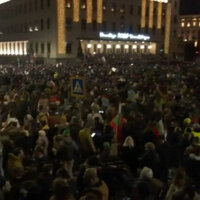
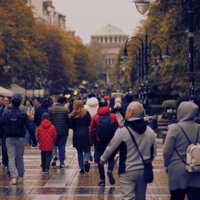
This bruising reality has fueled a series of mass protests, the latest coming Wednesday night when tens of thousands of people poured into the streets of Sofia and other cities and towns to demand the government resign.
In recent months, anger boiled over after the government, in the face of mounting public debt that fell outside the EU's strict fiscal rules, sought to impose a series of austerity measures, including tax hikes and pension cuts. Last week, the government reversed course on those austerity measures, but public outrage persisted.
"The public protests against the budget were the trigger for the fall," said Maria Spirova, an expert on Bulgarian and East European politics at Leiden University in the Netherlands, in an email.
She said demonstrations against the GERB-led government took place throughout the country, though they were most intense in the cities. She said Bulgarians are upset at the high level of corruption, especially among those in power.
The protests took particular aim at Bulgarian politician and oligarch Delyan Peevski, the leader of the Movement for Rights and Freedoms, a party backed mostly by voters with Muslim, Turkish and Romani backgrounds. Peevski's party provided the government with critical support in parliament.
But Peevski has been sanctioned by both the United States and the United Kingdom for corruption, bribery and embezzlement. He is also a former media mogul whom opponents accuse of steering government policy toward oligarchic interests.
For now, Bulgaria will be run by a caretaker cabinet arranged by Rumen Radev, Bulgaria's president and a fierce rival of Borissov, in consultation with Bulgaria's main parties.
"It is also key to see what President Radev will do now," Spirova said. "He is a wild card as he has announced his plan to form a political party, and has pro-Russian tendencies."
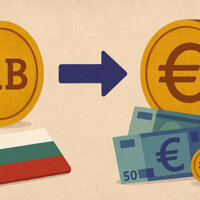
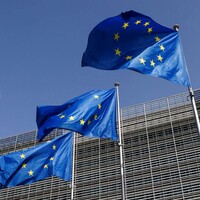
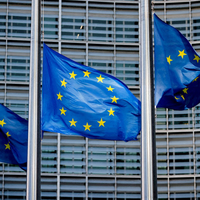
Bulgaria's political crisis comes only weeks before the country joins the eurozone and adopts the euro as its currency on Jan. 1, 2026.
This change, favored by the country's political and business elites and the EU's leadership, poses potential problems for Bulgarians who are at risk of seeing prices suddenly increase for everyday items.
Initially, though, by adopting the euro, Bulgaria will have access to better interest rates for borrowing and its introduction may stimulate tourism and outside investment.
However, some economists warn the country's fragile and weak economy would be better off keeping its currency, the lev. Calls to hold a referendum on adopting the euro were rebuffed by the government.
Courthouse News reporter Cain Burdeau is based in the European Union.
Source: Courthouse News Service