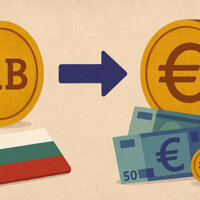



Public spending in Bulgaria is rising faster than revenues, driving the budget deficit upward, according to participants at the roundtable?Bulgaria's Fiscal Policy and Sustainable Economic Vision with Eurozone Entry?, organized by theBulgarian Association of Innovative Technologies (BRAIT)and theInstitute for Market Economics (IPI).
The event brought together around 15 speakers, including representatives of high-tech companies, industry associations, and economic experts such as Lyubomir Karimanski (BNB), Yordan Ginev (AIBEST), Dobroslav Dimitrov (BASKOM), Aleksandar Nutsov (BESCO), Ivan Mihaylov (American Chamber of Commerce), Assoc. Prof. Krasen Stanchev (IPI), and Georgi Angelov (Open Society Institute).
Key Takeaways
Spending outpaces revenue:Historically, public spending has hovered around 37% of GDP, with 40% considered a soft upper limit. In 2025, spending reached 42.4% of GDP, and it is projected to rise to 45% in 2026, raising concerns about fiscal stability and the potential for future tax increases.
Main driver of deficit:Experts agreed that rapid growth in public spending, rather than weak revenue collection, is the primary cause of the rising budget deficit.
Investment climate at risk:Uncertainty in fiscal policy and frequent changes in key financial decisions create challenges for businesses and investment planning.
Proposed Solutions
Structural reforms over mechanical fixes:
Enhance efficiency in public administration, health care, and social services.
Reform automatic mechanisms tied to salary growth.
Restructure hospitals and strengthen preventive and outpatient care.
Economic incentives:
Introduce modern tax tools to encourage investment, including accelerated depreciation and double recognition of R&D expenses.
Increase private sector participation in infrastructure projects through public-private partnerships and concessions.
Improving public sector efficiency:
Focus on more effective allocation of resources instead of simply increasing budgets.
Align administrative and public service structures with demographic trends.
Assessment of the 2026 Draft Budget
The draft lacks a comprehensive plan to control spending pressures.
Automatic spending mechanisms are mostly left intact.
Measures to improve efficiency in administration, health care, and social services are limited.
Overall, the budget remains expenditure-driven and does not provide a clear roadmap for boosting efficiency in key public systems.
Conclusion
Experts emphasized that sustainable fiscal policy cannot rely solely on revenue increases.Structural reforms, public sector modernization, and fostering innovationare essential to ensure fiscal stability and create a predictable investment environment as Bulgaria prepares to join the Eurozone.