

(Istanbul, November 6, 2025) - A cross-party parliamentary commission in Trkiye should use its mandate to recommend concrete legal and institutional reforms that protect human rights, justice, and the rule of law for Kurds and all other communities in the country, Human Rights Watch, the Turkey Human Rights Litigation Support Project, and the International Commission of Jurists said today. The organizations submitted a joint briefing urging the commission to prioritize reforms that enable a durable, rights-based peace.
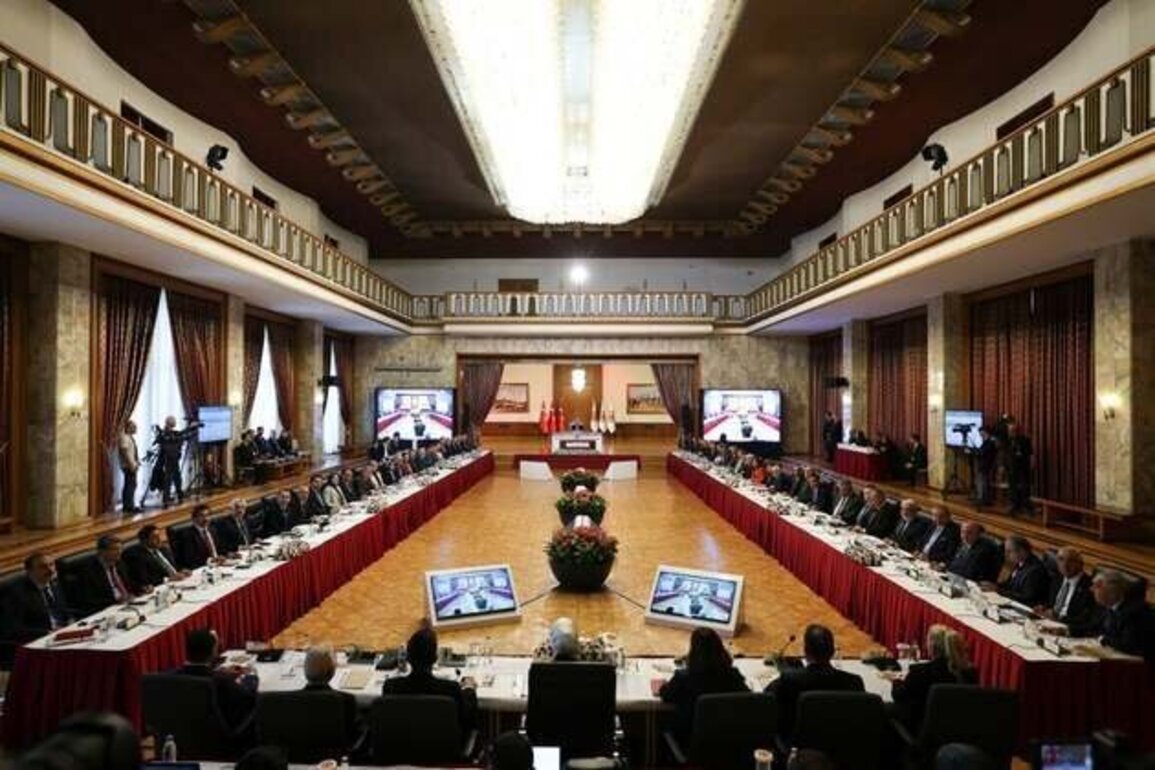
Parliament established the National Solidarity, Sisterhood/Brotherhood and Democracy Commission in August, 2025 after the Kurdistan Workers' Party (PKK's) announced its intention to disarm and disband. The announcement followed efforts by the Turkish government and Abdullah calan, the jailed PKK leader, to end the four-decade conflict. The commission's stated aim is to strengthen social integration, consolidate national unity and sisterhood/brotherhood, and advance freedom, democracy, and the rule of law.
"Bringing an end to the four-decade Kurdish conflict requires not just ending fighting but concrete steps to change laws that have long been used to bring criminal charges against and incarcerate Kurds and other groups for nonviolent political activity and speech," said Hugh Williamson, Europe and Central Asia director at Human Rights Watch. "The cross-party commission has a unique opportunity to help shape a post-conflict society and should make bold recommendations to repeal abusive laws used to silence and marginalize people."
The briefing, Advancing Human Rights, Justice and Democracy for Kurds and All Other Communities in Trkiye, draws on years of experience by the organizations in litigation, monitoring and documenting human rights violations and attacks against the rule of law and the separation of powers in Trkiye. The groups focused on abusive criminal law provisions which have been applied in discriminatory and politically motivated ways in Trkiye, particularly against Kurds and other perceived dissenting voices. While not exhaustive, the briefing outline four key areas in which structural reforms are urgently needed. The groups urged the commission to recommend achievable changes that can lay the foundation for a more rights-respecting, equitable and democratic post-conflict environment for all individuals and communities in Trkiye.
These areas include:
"The dialogue process between the parties to the conflict presents a historic opportunity to begin dismantling the entrenched cycle of violence and legal exceptionalism," said Aye Bingl Demir of the Turkey Human Rights Litigation Support Project (TLSP). "The commission should draw on the available expertise from civil society, lawyers' groups and academics and take an inclusive and wide-ranging approach to advocating for comprehensive reforms that uphold human rights and the rule of law, and that are necessary to underpin a sustainable peace."
The briefing also highlights two broader cross-cutting concerns that the commission should address. One is judicial independence: concrete steps are needed to ensure that the judiciary is institutionally protected from undue influence and able to uphold the rule of law for all, without interference or discrimination.
The other is accountability for grave human rights violations: the commission should address long-standing impunity for serious human rights violations that has marked the conflict. The commission should propose credible avenues for accountability for these violations committed by abusers on all sides of the conflict, and mechanisms for truth-telling and justice as necessary conditions for building a rights-based and democratic future for everyone in Trkiye.
"To fulfill its mandate, the commission should go beyond symbolic recommendations by addressing the structural injustices and discriminatory legal frameworks that have sustained decades of conflict, repression and impunity," said Temur Shakirov, Europe and Central Asia program director of the International Commission of Jurists. Achieving a durable peace requires dismantling these foundations and, instead, establishing enforceable human rights guarantees and ensuring accountability and democratic inclusion."
Source: Human Rights Watch