

Martin Duffy
Download PDF
Nov 20 2025
[email protected]/DepositphotosThe 2025 North Macedonian local elections constituted one ofOSCEslargest election observations in recent years, reflecting OSCEs continued commitment to the political stability of the region. Elections were held on 19 October 2025, with run-offs on 2 November 2025. Regional issues predominated in both polls but theElectoral Commissionreported the lowest turnout since independence. Reflecting ubiquitous voter apathy, the ethnic mix of North Macedonia also reveals a surprising complexity. This ethnic diversity is often under-identified in a territory which for several years after the fall of Yugoslavia was known as the Federal Yugoslav Republic of Macedonia (FYROM). North Macedonia is a landlocked country without internationally recognized, sovereign enclaves, yet it contains great demographic diversity. The entire country is effectively an enclave of the wider Balkan region, now neighbour to five different new states. I remember during my first visit as a teenager, Marshall Titos ubiquitous portrait smiling everywhere in a united Yugoslavia that said several communities within North Macedonia are also enclaves in a cultural, ethnic, or religious sense. TakeVevani, often dubbed the Republic of Vevani. A self-declared micro-nation during the breakup, it remains an Orthodox Christian enclave whose surrounding villages are predominantly Muslim.
Then there isSkopjes Old Bazaaror Turkish enclave with its Ottoman architecture. Financial support from Ankara and Gulf states has funded renewal of local facilities and mosques. These ethnically diverse areas are integral parts of North Macedonias territory, not sovereign geographical enclaves. However, in many ways, the local elections amplified their ethnic diversity. In the first round, the rulingVMRO-DPMNEwon the most mayoral spots (33) while VLEN won 5 municipalities, SDSM (3) and NAI (3) In the second round, the ruling conservatives achieved just over two-thirds of the mayoral contests, leaving opposition Social Democrats far behind. Working within this pattern, ethnic communal interests were only partially satisfied. This has heightened the desire of Macedonias ethnic groups to obtain better representation. They have individually seen their aspirations for greater self-government hastened by the evidence of what they might achieve outside the VMRO-DPMNE camp.
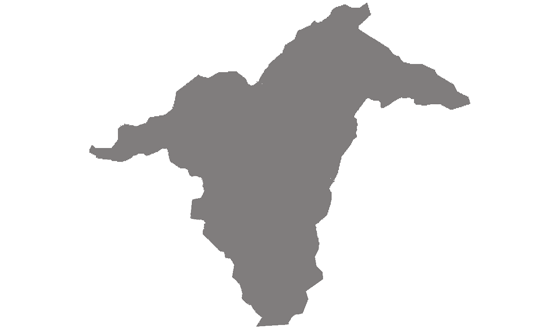
There are no distinct Russian-speaking areas in North Macedonia. Russian speakers are part of a small minority population. North Macedonia does, however, possess a community far more locally powerful than any of the distinctive communities mentioned above. One might argue that North Macedonia possesses a distinctively Romaenclave, increasingly distrustful of the failure of big government in Skopje to deliver for its residents. The 2025 local elections, despite all the hurdles of political representation, depict the Roma community in comparative political ascendancy. This may well be the last election where its representation will be anything but solidly Roma.Shutka (uto Orizari), a municipality within Skopje with the worlds largest concentration of Roma people, is the only municipality with a Roma-run local government. It is effectively a Roma enclave. Roma people likely arrived in Europe from northern India a thousand years ago. In Europe, there are 12 million Roma making them the continents largest minority over half of which live in the EU. TheCouncil of Europeestimates 200,000 live in Macedonia.
Over 80% of Suto Orizaris population is Roma. The Shutka municipality uses Romani as an official language, making it a unique case in Europe.Suto Orizaris residentsenjoy several TV channels in Roma and proudly hang its colourful flag featuring the symbolic Roma wheel. Its principal streets Che Guevara and Garcia Lorca lead unto a sprawling bazaar festooned with traditional Roma music and entertainments.While racist attacks on Roma are common in Europe, there is a level of security and autonomy in Shutka that is lacking elsewhere. Across the Balkans many Roma were displaced and disenfranchised as a result of the Yugoslav wars.Many remain stateless, including some in Shutka.
This enclave of southern Europe is a rare example of Roma relative autonomy,Sead Ismail,President of Shutkas municipal council, explains:
Roma have lived in Macedonia since the 15th century, and congregated in Shutka (somewhat accidentally) after the earthquake in 1963 which destroyed much of Skopje.Prior to that,Suto Orizariwas a desolate zone the name literally means barren fields. As part of Skopjes new urban plan, combining brutalist architecture and social engineering, the Roma were relegated to the area. It boomed. Local resident (Meneshka Umjer) describes the post-earthquake growth of the enclave:
Macedonia (as FYROM) became independent in 1991 and in 1996, the Roma living in Shutka began to govern themselves. In 2001, Macedonia narrowly avoided civil war between ethnic Macedonians, who are Slavs, and ethnic-Albanians, who make up 25% of the population. The peace agreement guaranteed minorities, including Roma,a role in the government.
Zeljko Jovanovic,Director of the Roma Initiatives Office of the Open Society Foundation explains the evolution of this state within a state:
By the 2002 census, Roma were 2.7% of the total population, and current government representation is at 1.4%, with 1,698 public officials, marking significant progress. However, one can see that Zeljko Jovanovics demands are reflected in frustration with the sluggish nature of some political changes. Only 0.2% of these Roma civil servants are managers, and only 0.3% hold elected positions, in figures provided byMacedonias Ombudsperson. MayorElvis Bajramobserves:
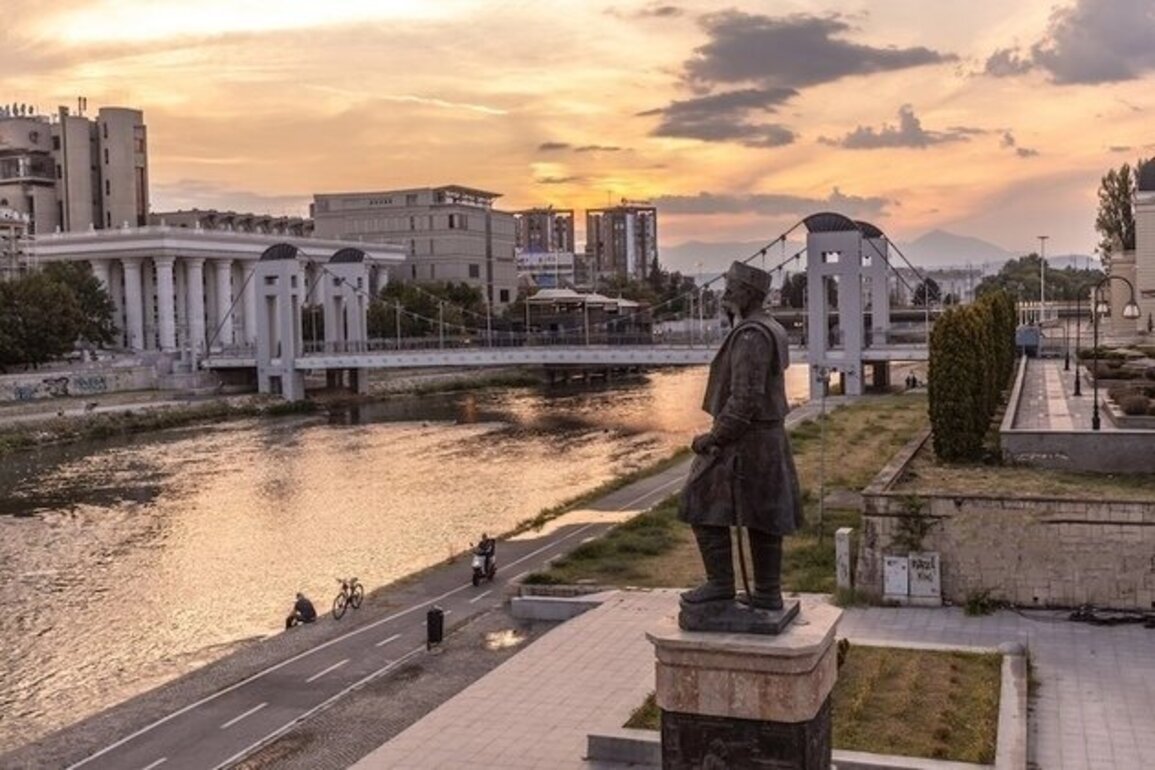
Shutka depends on the central government to redistribute funds from the national budget, therefore the parties in power largely control Roma votes. Indeed, of six political parties in Shutka, five are part (de facto proxies) of the countrys ruling coalition. Critics of the government complain about the way machine politics work in the municipality. Quality-of-life indicators for the Roma community in Macedonia are poor.Open Society Foundationeconomy figures are stark. Only 11% of Roma complete high school, compared with 60% of the general population. Roma in Macedonia have a lifespan 10 years shorter than the 76-years Macedonian average. Many cannot access healthcare because of prejudice and lack of documentation, with some 10% of Shutka residents are undocumented. Residents complain about the governments lack of assistance, in juxtaposition with the states $730m investment in the city-centre of Skopje, which controversially brought about gargantuan statues and neo-classical facades. Partially, these Potemkin adornments are an antagonistic gesture at Greece, currently blocking North MacedoniasEU/NATO membership. However, it also expresses Macedonian nationalism and may not sit well with the workaday aspirations of its divergent ethnic communities. Their mayors want spending on their own municipalities.
In Shutka an enclave of Roma self-governance, residents are largely protected from the discrimination that exists in other Macedonian districts where Roma live. Nevertheless,Shuktas challenges are immense, and the practical demands of Roma and other ethnic groups will be more visible in future North Macedonian elections. North Macedonias 2025 local elections are in many ways as significant as any parliamentary vote. They point to an emergent ethnic-identity, translating into enclave-politics, a trend which is likely to accentuate into national election patterns.
Further Reading on E-International Relations
- Ethnic Nationalism and the Challenge of Achieving Sustainable Peace in Ethiopia
- Opinion Turkeys May Elections Are about Regime Change
- Buddhist Nationalism and Extremism in Myanmar and North America
- Opinion Trkiyes 2024 Local Elections Challenge President Erdoan
- Opinion The Impact of the Russia-Ukraine War on European Nationalism
- Opinion What Could Save France from Macrons Self-inflicted Defeat?
About The Author(s)
Martin Duffyhas participated in more than two hundred international election and human rights assignments since beginning his career in Africa and Asia in the 1980s. He has served with a wide range of international organizations and has frequently been decorated for field service, among them UN (United Nations) Peacekeeping Citations and the Badge of Honour of the International Red Cross Movement. He has also held several academic positions in Ireland, UK, USA and elsewhere. He is a proponent of experiential learning and holds awards from Dublin, Oxford, Harvard, and several other institutions including the Diploma in International Relations at the University of Cambridge.
TagsElectionsEthnic NationalismMacedoniaYugoslavia