


ALEXANDRIA, Va. (CN) - The criminal case against former FBI director James Comey features hallmarks of political prosecutions carried out by other countries and should be considered a grave threat to the legal system, according to two groups of scholars and attorneys.
In their proposed amicus brief filed in Virginia federal court, professors representing institutions ranging from University of Chicago Law School to Harvard to the American Enterprise Institute, decried the case they argue was pursued by President Donald Trump.
And in a separate filing, more than 100 former officials with the U.S. Department of Justice contend the Comey case "marks a dangerous and unprecedented use of the Department of Justice's authority that is both unrecognizable and anathema" to former DOJ officials.
Both groups want the charges against Comey, a longtime Trump critic accused of making false statements within the jurisdiction of the U.S. legislative branch and obstruction of a Sept. 30, 2020 congressional proceeding, dismissed. He has pleaded not guilty.
The Justice Department attorneys denounce the case against Comey as blatantly vindictive to the point of violating bedrock principles of law. The professors take a longer view, linking the former FBI director's prosecution to the unraveling of democratic norms.
"It is essential to view Mr. Comey's prosecution in the larger context of how politicized prosecutions are used in autocracies and backsliding democracies and the risks that even one such prosecution poses," the professors write.
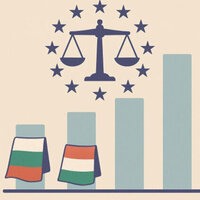
Leaders with autocratic tendencies increase authority by asserting control over government institutions previously insulated from political influence, including law enforcement and the judiciary, the professors argue, citing countries they've studied including Hungary, Turkey and Venezuela.
After assuming control over these institutions, they capitalize on that authority by prosecuting political opponents and those who attempt to hold them accountable for unlawful behavior.
This misconduct, the professors argue, "poses a grave threat to prosecutorial independence and the rule of law in the United States."
Based on the evidence available in the public record, they assert that the Comey indictment mirrors many features of politicized prosecutions in the countries they study. For example, Trump's social media and other statements indicate that he has long viewed Comey as an adversary. They also noted a message shared on social media in which Trump directed U.S. Attorney General Pam Bondi to bring charges, violating longstanding norms of prosecutorial independence.
The professors point out that Trump's personal attorney, Lindsey Halligan, presented the indictment to a grand jury - over the objections of career prosecutors who concluded they lacked evidence.
The president's appointment of Halligan as interim U.S. attorney for the Eastern District of Virginia is the focus of a separate motion charging that she was unlawfully appointed and lacks valid governmental authority.
"The role of the independent prosecutor can be key to upholding principles of fairness and impartiality in democratic governments, and when this role is compromised, so too is a country's system of justice and the rule of law," the professors argue.
The amicus proposals have been submitted to U.S. District Court Judge Michael Nachmanoff, who presides over the case.
Attorneys who signed on to the brief filed by former senior officials of the Justice Department include former attorneys general, solicitors general, assistant attorneys general and others from more than 45 districts and every region of the country.
The professors - all researchers who have focused on the weakening of democratic norms-include Javier Corrales, professor of political science at Amherst College; Larry Diamond, William L. Clayton Senior Fellow at the Hoover Institution; David M. Driesen, emeritus professor of law at Syracuse University College of Law; Francis Fukuyama, senior fellow at Freeman Spogli Institute for International Studies at Stanford University; Gabor Halmai, emeritus professor of the Etvs Lorand University in Hungary; Aziz Z. Huq, professor of law at the University of Chicago Law School; Rachel Kleinfeld, who studies and advises on issues involving troubled democracies; Steven Levitsky, professor at Harvard University, Maria Popova, associate professor at McGill University; Stephen Richer, CEO of Republic Affairs; Dalibor Rohac, senior fellow at the American Enterprise Institute; Susan Stokes, professor of political science at the University of Chicago; Lucan Way, professor at the University of Toronto.
The professors warn that such prosecutions will undermine the rule of law and that autocratic leaders typically do not stop with prosecuting just one adversary.
"There are other troubling signs that President Trump intends on targeting his political opponents using the immense prosecutorial power of the federal government. Reporting indicates the administration is seeking to install loyalists at the IRS criminal-investigative division to facilitate the initiation of politically motivated probes into left-leaning individuals and groups," the professors say.
In their brief, former federal prosecutors also argued that the stakes in the Comey case are not simply about one person. In the wake of this indictment, the president explicitly promised in televised remarks that 'there will be others."
Two of Trump's other prominent critics also face criminal charges: Letitia James, accused of bank fraud and making false statements to a financial Institution, and former National Security Adviser John Bolton, charged with unlawfully transferring classified information during the first Trump administration.
Source: Courthouse News Service