

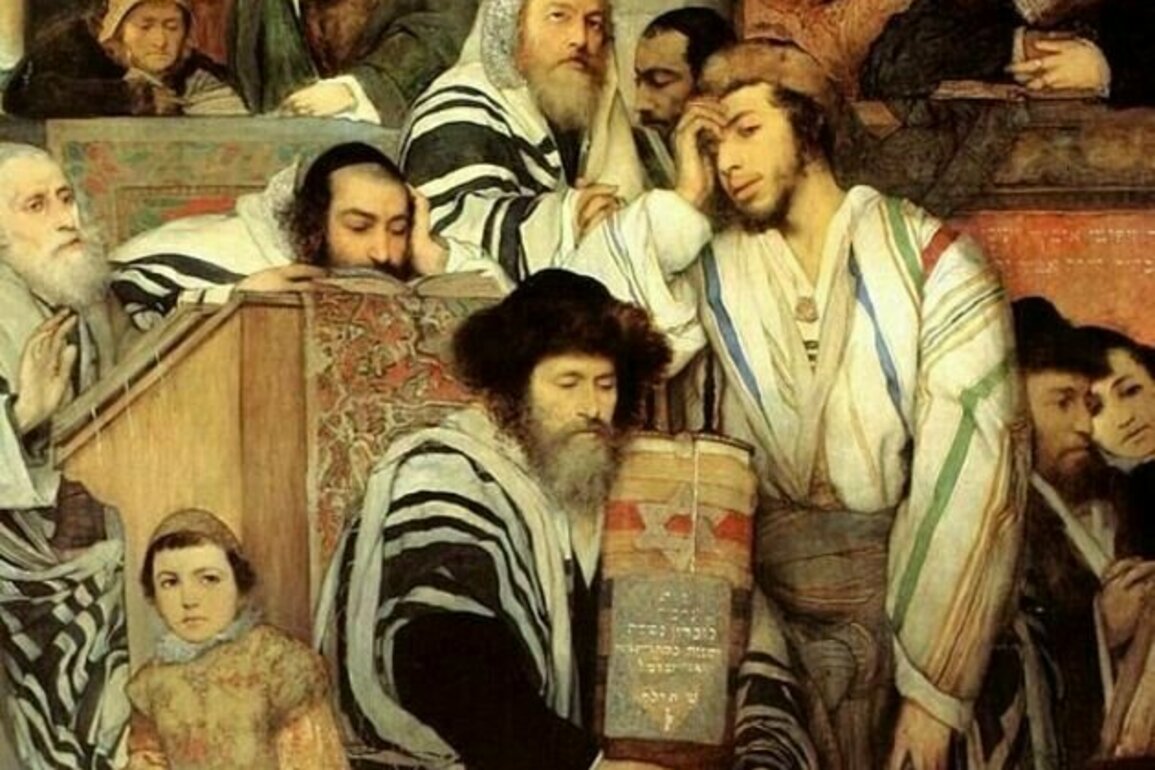
Genetics and history expose the Nazi fantasy, revealing that Jews were never strangers to Europe but one of its deepest ties to antiquity, writesMichael Cohen.
FOR CENTURIES, Europe defined itself by drawing boundaries of belonging. At times, Jews were placed outside those lines, told they were strangers to the continent. Zionism arose partly in response to that boundary-making, imagining Jewish life elsewhere.
Yet the deeper story, shown by history and genetics alike, is not of exile from Europe but of entanglement within it. Jewish communities were not apart from the European ecosystem; they were one of its dynamic currents.
The Nazis built their ideology on marble myths. They imagined themselves as heirs of Spartas discipline, Athens brilliance and Romes might. Their rallies echoed the forms of the Parthenon and the Colosseum, as if the architecture of antiquity could be reinhabited by their racial fantasies. But in classical times, the ancestors of modern Germans were forest tribes on the margins of the empire, known more for raids than philosophy. They were not the core of antiquity but its periphery.
What it means to be a leftist JewWhat does it mean to be a Jew shaped by memory, not nationalism? Michael Cohen reflects on identity, integrity and inherited conscience.
The irony is that the community the Nazis condemned as alien was, in genetic and cultural terms, more closely linked to the classical Mediterranean than the Nazis themselves. Recent genetic studies, including Behar et al (2010) inNature,Ostrer(2012), andAtzmon et al(2010), reveal thatAshkenazi Jewsdescend from a blend of Judean ancestry and Southern European ancestry, especially Italian and Greek. Paternal lineages lean Levantine, maternal lineages lean Southern European.
Today, it is almost conclusive, across multiple independent studies that Ashkenazi Jews are at least 50 per cent Mediterranean in origin partly Greek, but mostly Italian with the remainder possibly traced to the Levant as well as other parts of Europe. The result is a people whose history is rooted in the crossings of the Roman world, not outside of it.
As these Greco-Roman Jewish communities later moved north into the Rhineland and east into Poland and Russia, they carried with them habits of literacy, debate and urban intellectual life. The tradition ofTalmudicstudy, poring over dense texts, contesting meaning, refining arguments, emerged from these conditions. It reflects a culture embedded in networks of learning, not a people apart from their environment.
The continuities appear not only in spirit but in physical resemblance. Many Ashkenazim share features with Italians and Greeks; I know this personally, often being mistaken for both. Genetic studies confirm what is visible to the eye: Ashkenazim cluster closer to Southern Europeans than to Northern ones. These are not markers of separateness, but of shared histories and overlapping ancestries.
Semitism goes far beyond Jewish cultureWith a lot of focus on anti-Semitism in the world today, the term has often been mistaken as exclusive to Jewish people.
The irony is sharp. The Nazis claimed to embody Athens and Rome, yet in Germany, it was the very community they sought to erase that carried concrete ties to that world. In destroying them, they cut Germany off from one of its living connections to antiquity.
The larger lesson is that nations are never pure. They are mixtures, crossings, reinventions. Rome was never only Italian, Athens never only Greek. To think of Jews as outside Europe is to misunderstand Europe itself. They were part of its texture a Mediterranean and continental people, shaped by the same flows and transformations that shaped everyone else.
The harshest irony is this: the closest connections to Athens and Rome did not lie with those who worshipped them from afar, but with those woven into their world through family, migration and faith. Genetic science underscores this entanglement. And perhaps the more radical recognition is that Jewish history was never truly elsewhere. It has always been part of Europes own story not as strangers, but as one of the many threads that make the fabric.
And yet out of centuries of being told otherwise, Zionism was built; less on science or history than on myth. That it took root so deeply is itself another irony: a politics forged in response to exile, even as the evidence now shows that exile was never as absolute as the myth required.
Michael Cohenis a Sydney-based Jewish Australian writer who previously contributed extensively to international newspapers, offering both articles and conceptual material. He now focuses on human rights issues.