

Pnar Buket Kln Pala
Download PDF
Jul 16 2025
1
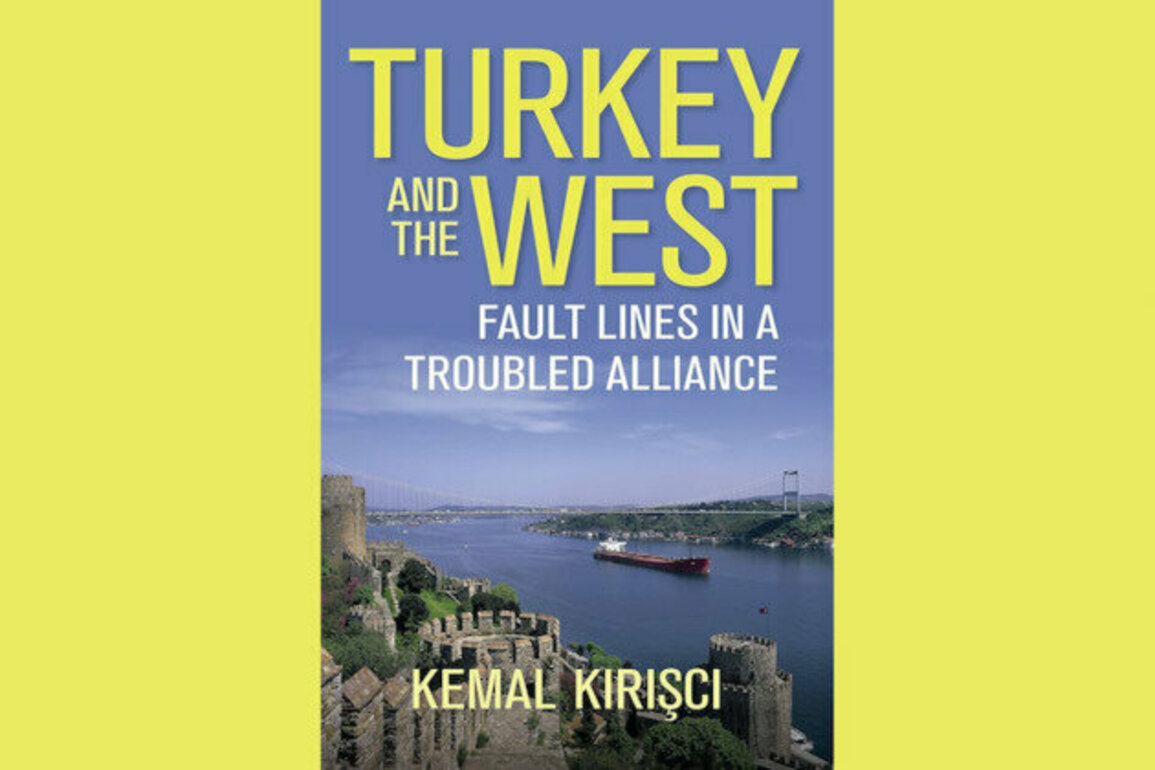
viewsImage by Brookings Institution PressTurkey and the West: Fault Lines in a Troubled Alliance
By Kemal Kirici
Brookings Institution Press, 2017
Kemal KiricisTurkey and the West: Fault Lines in a Troubled Allianceprovides a timely and comprehensive examination of the shifting dynamics between Turkey and the West, particularly the United States and European nations. Positioned within a historical and institutional framework, the book investigates the long-standing complexities, ideological divergences, and strategic misalignments that have characterized the bilateral relationship. Central to the book is the exploration of how Turkeys transformation in domestic and foreign policy has shaped, and in many ways strained, its interactions with the transatlantic community. Kirici highlights growing concerns about the ability of the transatlantic community to uphold the international liberal order. Structured into eight well-defined chapters, the book offers a chronological and thematic analysis of TurkeyWest relations. Despite occasional tensions especially following the 1980 military coup Turkey maintained its status as a crucial actor within the Western security framework. This period reflects the complex interplay between internal political instability and sustained geopolitical relevance. The book traces the evolution of TurkeyWest relations across different historical junctures, offering a comprehensive analysis that extends from the Cold War period to the present day.
The analysis sheds light on how identity-based tensions, democratic backsliding, and diverging foreign policy priorities have collectively strained Turkeys ties with its Western allies. By presenting a forward-looking assessment in its final chapter, the book captures the deepening ambivalence surrounding Turkeys future in the transatlantic alliance and outlines potential scenarios shaped by both mutual dependence and increasing disillusionment. However, since the 2010s, especially under President Erdoans leadership, increasing authoritarian tendencies, human rights violations, and pragmatic shifts in foreign policy have led to significant fractures in Turkey-West relations. Today, the bilateral relationship is marked by deep and persistent tensions across critical areas such as the Syrian conflict, energy diplomacy, migration management, and NATO cooperation. Kirici emphasizes that the roots of these tensions lie primarily in a fundamental mismatch between Turkeys increasingly independent, interest-based foreign policy and the normative expectations of the West, which are anchored in shared democratic values and institutional commitments.
Throughout the book, Kirici is careful to emphasize that the current tensions are not solely attributable to developments in Turkey. He calls attention to inconsistencies and internal divisions within the West, including the erosion of democratic norms in certain Western countries and competing strategic agendas within NATO and the EU. Nevertheless, he maintains that the burden of reform lies largely with Ankara, particularly in terms of restoring rule of law, democratic accountability, and adherence to international norms.
In my view,Turkey and the West remains highly relevant today, but it could be further enriched by incorporating the major political and geopolitical shifts that have occurred since its publication. While Kiricis core arguments such as the normative divergence between Turkey and the West, the authoritarian turn in Turkish domestic politics, and the transformation of the transatlantic order still hold strong explanatory power, they now operate within a more complex and evolving international landscape. Since the 2020s, Turkeys foreign policy has become increasingly multi-aligned, with growing engagement not only with the United States and the EU but also with Russia, China, and the Gulf countries. This diversification challenges the traditional framework of TurkeyWest relations and calls for a rethinking of strategic dependencies and new forms of leverage, especially in forums such as BRICS+. Moreover, although the Biden administration has aimed to revitalize NATO, internal divisions within the alliance, debates over European strategic autonomy, and the impact of the war in Ukraine have reshaped the nature of transatlantic cooperation. In this context, Turkeys position appears more transactional and interest-driven than normatively anchored, further straining its role within Western institutions.
On the domestic front, I believe that the trends Kirici identified have intensified. Ongoing democratic backsliding, constitutional changes, tighter media controls, and growing socio-economic pressures have deepened the governance gap between Turkey and its Western allies. These internal developments continue to feed skepticism in the West regarding Turkeys long-term trajectory. Additionally, Turkeys security concerns have expanded beyond the Syrian conflict to include tensions in the Eastern Mediterranean, the IsraelHamas war, Swedens NATO accession, and shifting dynamics in energy geopolitics. These emerging flashpoints complicate Turkeys role in NATO and add new layers to its strategic calculus. While migration management remains a key tool in Turkeys relations with the West, it has also become a source of domestic polarization and political tension, reflecting both the strength and the fragility of interdependence.
The author offers a thorough analysis of a complex environment shaped by numerous actors, overlapping interests, and a prevailing sense of uncertainty. Central to his perspective is the aspiration for a progressive, stable, and peaceful Turkey. He emphasizes that without a foundation of shared values and a collective sense of unity, achieving this vision may prove difficult. In fact, he suggests that navigating the dynamics of contemporary Turkey is likely to be even more challenging than in the past. Considering the current internal and external political and security issues the country faces, it is evident that the insights provided in the book remain remarkably relevant, even eight years after its publication. To sum up, I believe Kiricis work provides a strong foundation, but updating it to reflect todays multifaceted realities would offer even greater insight into the evolving nature of TurkeyWest relations. Such an update would not only preserve the books analytical value but also enhance its relevance for scholars and policymakers navigating the current geopolitical climate.
Further Reading on E-International Relations
- Review Erdoans Empire: Turkey and the Politics of the Middle East
- Review Europe and America: The End of the Transatlantic Relationship?
- Interview Isa Yusibov
- Review The Rise and Fall of Peace on Earth
- Thinking Global Podcast Aylin Matl
- Review The Kurds of Northern Syria
Deniz Gn Eraslan
TagsEuropeForeign PolicyNATOTransatlantic RelationsTurkeyUnited States