

Babek Chalabi
Download PDF
Jun 18 2025
1
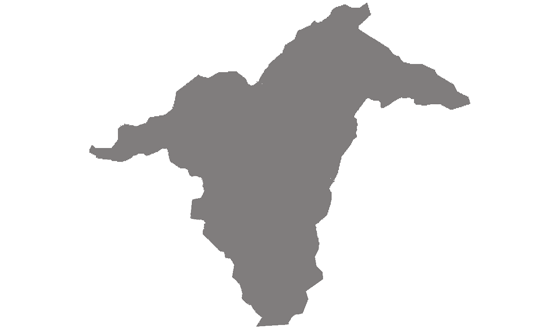
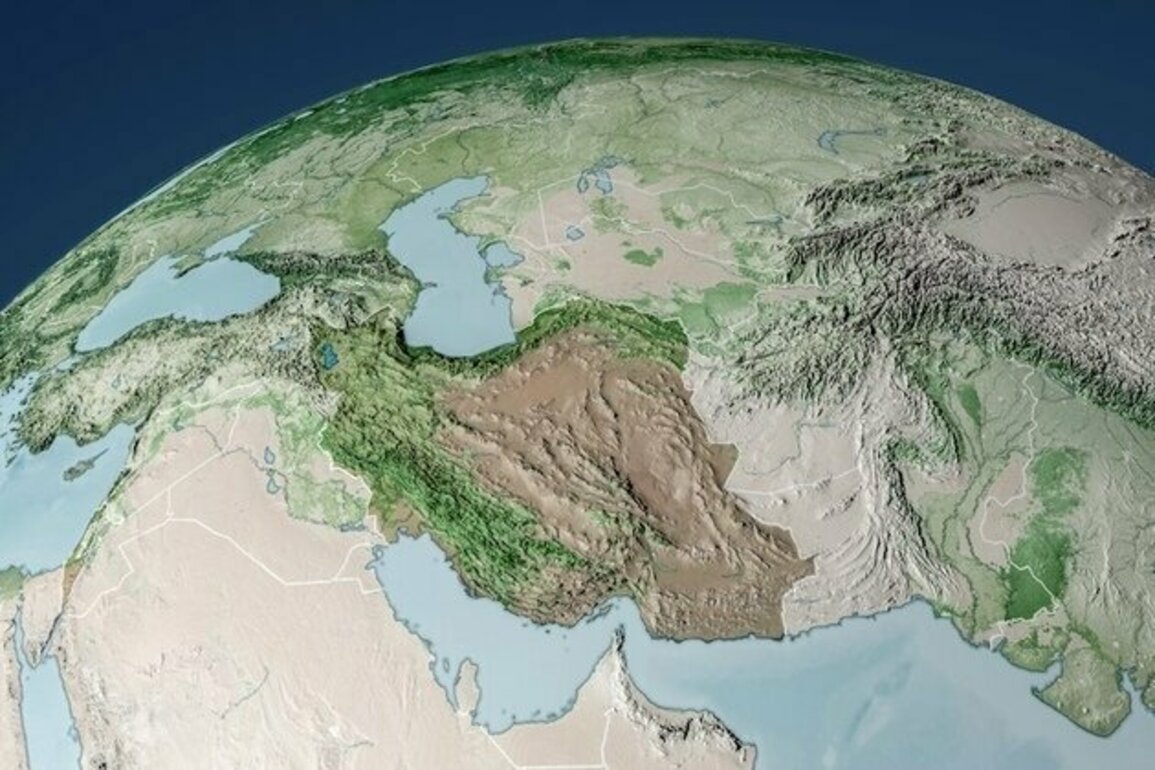
viewsvampy1/DepositphotosThe Israeli airstrikes on June 13 targeting military installations across north-western Iranparticularly in Tabriz, Urmia, and Marandhave exposed a widening security vacuum in a region long strained by ethnic tensions and strategic neglect. The longer the unitary power of the Islamic Republic of Iran appears to unravel, the more questions of territorial power, ethnic self-determination, and regional realignment acquire fresh urgency. One part of the region that has suddenly become focused is South Azerbaijan, where millions of Azerbaijani Turks have long felt themselves on the margins of state power andnational recognition.
South Azerbaijan is a densely populated, culturally distinct, andgeopolitically sensitivearea connecting Iran with the Caucasus and Anatolia. For centuries, its people have tread a delicate balance between allegiance to the Iranian state and mutedexpressions of national identity based on a Turkic language and heritage. Language prohibition, exclusionary language policy by educational authorities, and media censorship havehistorically marginalized this identity. But the collapse of the states capacity first evident inthe regimes release on bail of its top military leadership now makes this moment a potentially transforming one for the political future of the region.
The intersection of internal collapse with external agitation makes this moment especially volatile. Kurdish armed groups, notably PJAKthe Iranian offshoot of the PKKhave increased their presence in West Azerbaijan, particularly in the vicinity of Piranshahr, Oshnavieh, and Sardasht. The expansion of these groups follows a pattern seen elsewhere in the region: in northern Syria, for example, the Syrian Kurdish YPG used a similar opportunity to carve out autonomous zones under the pretext of defending vulnerable populations with indirect Western support.
South Azerbaijani activists and strategists view the current situation as an emerging case study in regional power dynamics. Based on precedents in northern Syria and Iraq, they assess that a prolonged security vacuum could be exploited by organized, ideologically motivated militias with ethno-territorial ambitions. In particular, the prospect of a contiguous Kurdish corridor extending from Sinjar in Iraq to Maku in Iran is seen as a geopolitical development that could challenge the territorial cohesion of South Azerbaijan and introduce demographic transformations affecting the regions Turkic identity.
This viewis not entirely without foundation. Several Kurdish political platforms, including PJAKs Democratic Peoples Platform, explicitly envision a transnational Kurdish federation that encompasses parts of Iranian Azerbaijan. Such aspirations are deeply incompatible with Azerbaijani nationalist goals, and the potential for conflict is highespecially in mixed-ethnic cities like Urmia, where underlying tensions remain unresolved.
Under these circumstances, the demandsfor creating a South Azerbaijan National Defence Front have intensified. Regime collapse is possible, and the region needs to ready itself for that not by hoping it might be possible but by doing structured contingencies. This would include organizing local defense units, establishing emergency governance councils, and diplomatic outreach to international actorsmost notably Turkey and the Republic of Azerbaijan.
Turkeys role in this equation is especially critical. As a NATO power with a history of military operations against Kurdish groups along its borders, Ankara has a vested interest in preventing the emergence of a contiguous Kurdish zone along its eastern frontier. At the same time, the Republic of Azerbaijan, fresh from its victory in the 2020 Karabakh war, may view developments in South Azerbaijan through the lens of Turkic solidarity and strategic opportunity.
Yet the formation of an autonomous or independent Azerbaijani entity in northwest Iran is not inevitable, nor would it be without challenges. Ethnic pluralism in the region means that any new political structure must address minority rights within South Azerbaijan. Moreover, international recognition of new statesespecially those emerging from internal conflictis complex and often contentious. Without clear legal frameworks, transitional justice mechanisms, and inclusive political representation, autonomy could quickly descend into another form of authoritarianism or sectarian rule.
Still, the collapse of the Islamic Republic, should it occur, will likely be chaotic, leaving power vacuums that invite competition among both internal actors and regional powers. In this scenario, the question facing Azerbaijani Turks is not whether they should actbut how quickly and coherently they can organize before others shape their future.
The strategic imperative is to shift from a reactive posture to a proactive one. That entails enhancing local governance, training civilian defense forces, mobilizingdiasporas, and crafting a coherent political stance to present on the world stage. It also requires a change in mindset moving from protest topreparation, from symbolic pushback to structural readiness. The alternative is to be overtaken by eventswhether that be Kurdish militia advances, regime fragmentation, or foreign-backed disintegration. In the absence of preparation, South Azerbaijan could be forced into a new political reality, not of its own making, where its people remain voiceless in yet another iteration of external domination.
At this critical juncture, South Azerbaijan must look beyond Tehran. Its fate will not be determined in the halls of a collapsing regime but in the actions of its people, in coordination with regional allies and grounded in a clear political strategy. Whether this leads to federal autonomy, confederate arrangements, or full independence remains to be seen. But without action, there will be no agencyand without agency, there can be no future on their terms.
Further Reading on E-International Relations
- Opinion Tractors Quiet Revolution in Irans Ethnic Politics
- Opinion Environmental Loss and Repression in Iran
- Might Over Law: Israels Strike on Iran and the Future of Global Order
- National Honor and Religious Duty: Irans Strategic Evolution in Confronting Israel
- Opinion Iran 2020: Election Polls, Panics and Predictions
- Opinion The Iranian Regimes Future Post Soleimani
About The Author(s)
Babek Chalabiis a PhD student and political analyst based in Washington, D.C., focusing on ethnic politics and regional security in Iran and the Caucasus. He founded ArazNews.org.
TagsIranSouth Azerbaijan